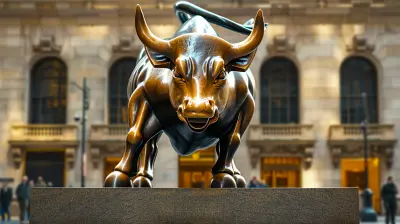
Financial Freedom: The Role of Risk Tolerance in Wealth-Building
20 January 2026
Have you ever dreamed of waking up one day, realizing that you’re financially free? No more 9-to-5 grind, no more stressing over bills, and complete control over your time and money. Sounds amazing, right?
But here's the catch—getting there isn’t just about saving money or earning a six-figure salary. It's about building wealth strategically, for the long haul. And one crucial piece of that wealth-building puzzle? Risk tolerance.
Let’s break it all down, in plain English, so you can figure out your own risk appetite and how it fits into your journey toward financial independence. Ready? Let’s dive in.
What Is Financial Freedom, Really?
Before we get into risk tolerance, it's important to first understand what financial freedom actually means.Financial freedom isn’t just about having “lots of money.” It’s about having enough to live the life you want—without constantly worrying about money. It means:
- Your bills are paid without stress.
- You’re not drowning in debt.
- You have savings and investments.
- Most importantly? You’re not tied to a paycheck.
It’s the ultimate goal for many of us, but achieving it requires more than just a few good financial decisions. It’s a mindset, a long-term strategy, and, yep, a willingness to take some risks.
What Is Risk Tolerance?
Okay, risk tolerance—it’s kind of a mouthful, but it’s not as complicated as it sounds.Risk tolerance is simply your ability (and comfort level) to handle the ups and downs of investing.
Imagine you’re on a roller coaster. Some people scream in delight. Others are gripping the seat, begging to get off. That’s risk tolerance in action—how much uncertainty or potential loss you’re comfortable with in exchange for potential gains.
In finance, risk tolerance influences how you invest, save, and plan. It’s deeply personal, shaped by your age, income, goals, personality, and past experiences.
Some folks go all-in on stocks and real estate. Others stick with savings accounts and CDs. Neither is “wrong”—but knowing your comfort zone helps you make smarter choices for your future.
The Link Between Risk Tolerance and Wealth-Building
So why does risk tolerance even matter when it comes to building wealth?Well, here’s a basic principle in investing: the greater the risk, the greater the potential reward. If you want to grow your money significantly, you typically need to accept a little (or a lot) of risk.
Let’s look at two quick examples:
- Investor A puts $1,000 into a savings account earning 1% interest.
- Investor B puts $1,000 into a diverse mix of stocks with an average return of 7% annually.
Over 30 years, Investor A ends up with around $1,350. Investor B? Closer to $7,600. Quite the difference, right?
But here’s the thing—Investor B has to be okay with market dips, volatility, and the occasional scary headline. The key is that over time, markets tend to go up. It’s not guaranteed, and there are no crystal balls, but history has consistently rewarded those who stay the course.
Your Personal Risk Tolerance: Factors That Matter
So, how do you know what your risk tolerance is? Here are some things to consider:1. Time Horizon
How long do you plan to invest? If you’re young and have decades before retirement, you can afford to take more risks. Why? Because time smooths out short-term bumps. But if you’re closer to retirement, you might want to play it safer.2. Financial Goals
Are you building an emergency fund? Saving for a house? Planning for early retirement? Different goals have different risk “requirements.” Quick goals = lower risk. Long-term goals = you can potentially handle more.3. Income and Job Security
If your income is stable and you have a good cushion saved up, you might be able to stomach more risk. On the flip side, if your income fluctuates or your expenses are high, you’ll want to be more conservative.4. Personality and Emotions
Let’s be real—finance isn’t just numbers. It’s also emotions. If watching your investments dip even slightly makes you panic, you might be a risk-averse investor. And that's totally okay. There’s no one-size-fits-all approach.The Different Types of Risk Takers
Still trying to figure out where you land? Here’s a quick snapshot of common investor personalities:🐢 The Ultra-Conservative
You avoid stocks like the plague and love the safety of cash, CDs, and government bonds. Your money won't grow quickly—but you sleep like a baby.🛡️ The Moderately Conservative
You dabble in investments but still lean toward safety. You might own some bonds and a few blue-chip stocks.⚖️ The Balanced Investor
You’re okay with taking on some risk, as long as the rewards seem worth it. Your portfolio might be 60% stocks, 40% bonds.🚀 The Risk-Tolerant
You believe in the long game and aren’t shaken by market dips. You’ve probably got a portfolio full of stocks, ETFs, and maybe even a little crypto.🎢 The High-Risk Adventurer
You chase high-reward opportunities, often in volatile markets like crypto, tech startups, or real estate flipping. You’re all about big wins, but you’re also comfortable with potential big losses.Where do you see yourself? Knowing your type is the first step toward an investment strategy that actually works for you.
Adjusting Your Risk Tolerance Over Time
Here’s a cool thing about risk tolerance—it’s not fixed. It changes as you grow.When you’re young and just starting out, you can afford to be aggressive. Why? Because you have time to recover from mistakes or market dips.
But as life gets more complex—maybe you start a family or think about retirement—you might want to dial things back a bit. That’s completely normal.
Pro tip: revisit your investment strategy every year or after a major life event. Make sure it still matches your goals and your comfort zone.
Risk Mitigation: Being Smart (Not Scared)
Taking risks doesn’t mean being reckless. Wealthy people take calculated risks—they know the downsides, but they also know the potential upside.Here’s how to manage risk without losing sleep:
✅ Diversify Your Portfolio
Mix things up. Don’t put all your eggs in one basket. Own a blend of stocks, bonds, real estate, and maybe some alternative assets.✅ Stick to a Plan
Create an investment plan and stick to it. Don’t panic and sell when the market dips—because it will dip. What matters is how you handle those dips.✅ Take Advantage of Time
Time is your best friend as an investor. Thanks to compounding returns, the earlier you start, the more your money grows—without taking on more risk.✅ Educate Yourself
The more you know, the less scary risk feels. Read books, follow financial blogs, talk to advisors. Knowledge builds confidence.Fear vs. Opportunity: Changing Your Mindset
Let’s be honest—most of us were raised to fear risk. We were told to be careful with money, avoid debt, and keep our savings safe. Those aren’t bad lessons… but they can hold you back.Here’s the truth: building wealth requires some level of discomfort. Growth always does.
Think of it like working out. If you never push your muscles, you won’t get stronger. Same thing with money. You’ve got to stretch a little to see results.
So instead of fearing risk, start seeing it as a bridge. A bridge between where you are now and the life you want to live. Just make sure that bridge is built on solid ground—your goals, your plan, and your understanding of yourself.
Final Thoughts: Building Wealth on Your Terms
Financial freedom isn’t about gambling with your future. It’s about taking smart, informed, and intentional risks that align with your personal goals.Your journey is unique—and your risk tolerance should reflect that. Whether you’re a slow-and-steady tortoise or a full-throttle investor, what matters is that you’re moving forward.
So ask yourself: What am I comfortable risking today to create a better future for tomorrow?
Because the truth is, avoiding all risk might feel safe—but in the long run, it could be the biggest risk of all.
all images in this post were generated using AI tools
Category:
Financial FreedomAuthor:

Harlan Wallace
Discussion
rate this article
2 comments
Tamara Sawyer
Understanding risk tolerance is crucial; it shapes investment strategies and wealth-building success.
March 25, 2026 at 5:30 AM
Harlan Wallace
Absolutely, knowing your risk tolerance is key to making informed investment choices and achieving financial freedom. It really sets the foundation for your wealth-building journey.
Darrow Fisher
Risk tolerance shapes your financial destiny; embrace uncertainty to unlock hidden wealth potential.
January 28, 2026 at 4:06 AM
Harlan Wallace
Absolutely! Embracing uncertainty and understanding your risk tolerance are key to unlocking greater financial opportunities and achieving true wealth.