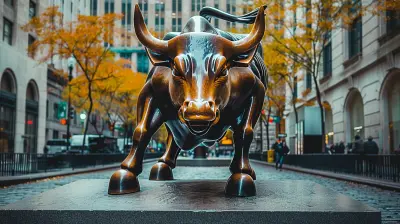
Risks You Didn’t See Coming: Black Swans in Speculative Markets
24 May 2026
Speculative markets are where dreams are made—until they suddenly aren’t. You've probably heard stories of overnight millionaires flipping cryptocurrency or YOLO-ing into meme stocks. But what about the ones who lost it all? Not from making bad bets, but from events no one saw coming—black swans. And no, we're not talking about your local pond's moody bird.
Black swans are those rare, unexpected, and game-changing events that can completely flip the financial script. They’re the uninvited guests at the party—no one plans for them, but when they arrive, they make damn sure you remember them.
Let’s dive into the deep end of speculative markets and uncover the hidden risks you didn’t see coming.
What Is a Black Swan Event, Really?
We’re not talking feathers here. The term “black swan” was made famous by Nassim Nicholas Taleb, a former trader and now-philosopher of randomness. In his world, a black swan is an event that:1. Is highly unpredictable,
2. Has a massive impact,
3. Is often rationalized in hindsight (like, “Yeah, we should’ve seen that coming”).
In essence, these are the financial world’s equivalent of a lightning bolt on a sunny day. You don’t see it coming, it hits hard, and afterward, everyone’s pretending they always knew the clouds were looming.
Why Speculative Markets Are Breeding Grounds for Black Swans
Speculative markets thrive on uncertainty. Traders gamble on vibes, headlines, and rumors. It's part strategy, part chaos. And in such an environment, black swans love to crash the party.Think about it—stocks like GameStop skyrocketing for no fundamental reason? That’s speculation at its finest. But this same volatility creates fragile ecosystems, just one weird event away from collapse.
Example: The COVID-19 Market Meltdown
Back in early 2020, most investors were riding high. Markets hit record highs. Then bam—COVID-19 hit. No one priced in a pandemic. Within weeks, global stock markets dropped like a sack of bricks. Airlines, cruises, oil—all tanked. It was a textbook black swan. And speculative traders, who were overexposed and overleveraged, took the hit hardest.
The Mirage of Control: Why We Think We’re Prepared (But Aren’t)
Let’s admit it—we’re control freaks. We think if we analyze enough charts, follow enough gurus on Twitter, or buy the right mix of assets, we can outsmart the market. That’s cute, but naïve.Black swans make us painfully aware of how little control we actually have.
Overconfidence Bias
This is the cognitive equivalent of thinking you can drive just fine after three beers. Overconfidence in your strategy, especially in a speculative market, is like holding dynamite and ignoring the spark. It's not if it will explode, it's when.Herd Behavior
Ever wonder why people rush into or out of trades at the exact same time? That’s herd mentality. And when a black swan shows up, the herd doesn’t walk—it stampedes, causing wild volatility and market crashes.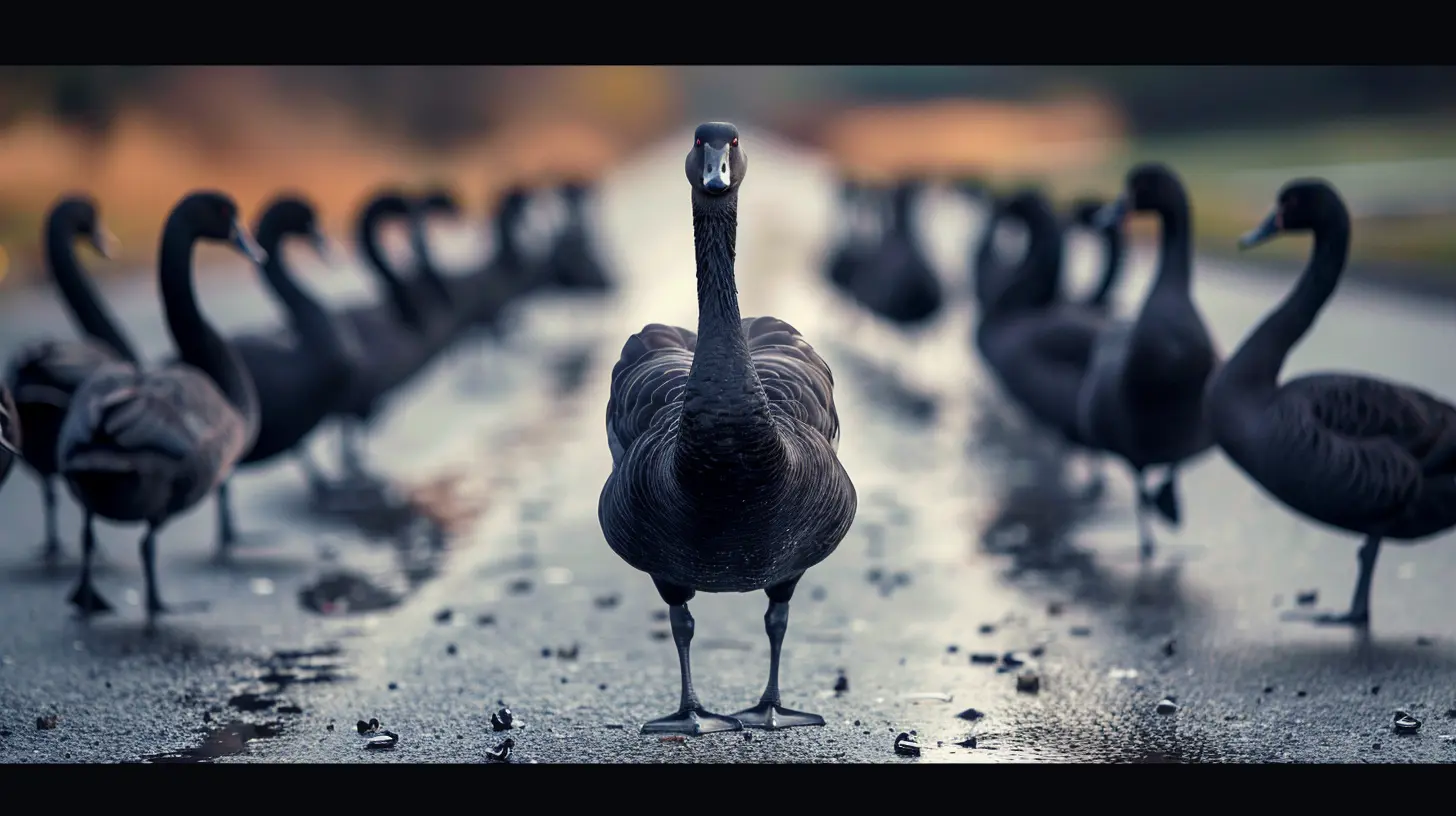
Famous Black Swan Events That Rocked Speculators
Let’s roll back the clock and see some of the biggest black swans that left traders shaking.1. The 2008 Financial Crisis
This is the kingpin of black swans. While a few whistleblowers sounded alarms, the general consensus was that the housing market was bulletproof (spoiler alert: it wasn’t). Lehman Brothers collapsed, credit froze, and trillions evaporated overnight. Speculators betting heavily on real estate-backed securities were completely blindsided.2. The Swiss Franc Shock (2015)
The Swiss National Bank unexpectedly abandoned its currency cap against the Euro, causing the Franc to skyrocket by 30% in minutes. Traders, especially those using leverage in currency markets, were wiped out almost instantly.3. The Flash Crash (2010)
On May 6th, 2010, the Dow dropped about 1,000 points in 10 minutes—then rebounded just as fast. Algorithms went haywire, and panic ensued. No one really knows what triggered it. That’s what makes it a true black swan.Risk Management in Speculative Markets: Not Optional
If you’re playing in speculative markets and ignoring risk management, you’re basically juggling knives with a blindfold. Fun? Maybe. Smart? Absolutely not.1. Diversify, But Intelligently
Diversification isn’t just about owning a bunch of stuff. It’s about owning uncorrelated assets. If everything in your portfolio drops when Bitcoin sneezes, you’re not diversified. You’re just stacked in the same boat.2. Use Stop-Losses and Limit Orders
These aren’t just fancy trading tools. They’re your seatbelt. You may not prevent the crash, but you’ll walk away in better shape.3. Keep Cash on the Sidelines
In speculative markets, liquidity is power. When a black swan hits and everyone’s panicking, having cash gives you options—not anxiety.Psychological Resilience: Your Hidden Superpower
Let’s not underestimate the mental toll of black swan events. Seeing your portfolio bleed 50% is not just painful—it can be paralyzing.Practice Emotional Discipline
This isn't the time to dump your assets or revenge trade. That’s like trying to punch the ocean during a storm—you’ll only exhaust yourself.Have a Contingency Plan
Hope is not a strategy. Ask yourself: “What if everything goes sideways?” If you don’t have an answer, you’re not ready.Black Swans in the Age of Social Media
In today’s hyper-connected world, information spreads faster than ever. But so does misinformation. Social media can create—or magnify—black swans.Meme Stocks & FOMO Frenzies
Remember AMC and GME? They became battlegrounds for retail investors, powered by Reddit and Twitter. The black swan wasn’t just the stocks’ wild swings—it was the why. Social coordination and viral momentum created unprecedented volatility.Crypto Twitter & Influencer Hype
In speculative crypto markets, one tweet from Elon Musk can send prices soaring or crashing. If that’s not fertile ground for black swan events, what is?Can We Predict Black Swans? (Short Answer: No)
By their nature, black swans are unpredictable. You can prepare, but you can’t pinpoint. Trying to forecast them is like trying to plan your day around meteor strikes.But that doesn’t mean you should bury your head in the sand. Awareness and preparation are your best defense.
So, Should You Stay Away From Speculative Markets?
Not necessarily. Speculative markets offer massive upside—but only for those who respect the risk.It’s Like Surfing
Gorgeous waves can carry you far—but they can also slam you into the rocks. Surf smart. Don’t overcommit. Know when to get out of the water.Final Thoughts: Embrace Uncertainty, But Don’t Be Reckless
Speculative markets are thrilling. They’re where fortunes are forged and legends born. But they’re also where dreams go to die—especially when black swan events rear their ugly heads.Remember, the biggest risk isn’t the event itself—it’s thinking it can’t happen to you.
Be curious. Be cautious. And always expect the unexpected.
all images in this post were generated using AI tools
Category:
Speculative InvestingAuthor:

Harlan Wallace
Discussion
rate this article
1 comments
Maddox Baker
This article sheds light on unexpected risks in speculative markets, emphasizing the importance of vigilance and adaptability. Recognizing potential black swan events can safeguard investments in uncertain times.
May 30, 2026 at 4:19 AM
Harlan Wallace
Thanks for your thoughts! It's crucial to stay alert in these unpredictable markets. Awareness can make a real difference.